Microelectronics in Saxony: Careers in Europe's Chip Region
Updated:
Saxony is one of Europe’s leading hubs for microelectronics. In and around Dresden—also known as “Silicon Saxony”—international companies, research institutions, and startups are developing technologies for the future.
The industry offers a wide range of career opportunities for international professionals, apprentices, and college graduates—for example, in manufacturing, IT, electronics, engineering, or research. Well-known companies in the industry include Infineon Technologies, GlobalFoundries, Bosch, TSMC, and X-FAB.
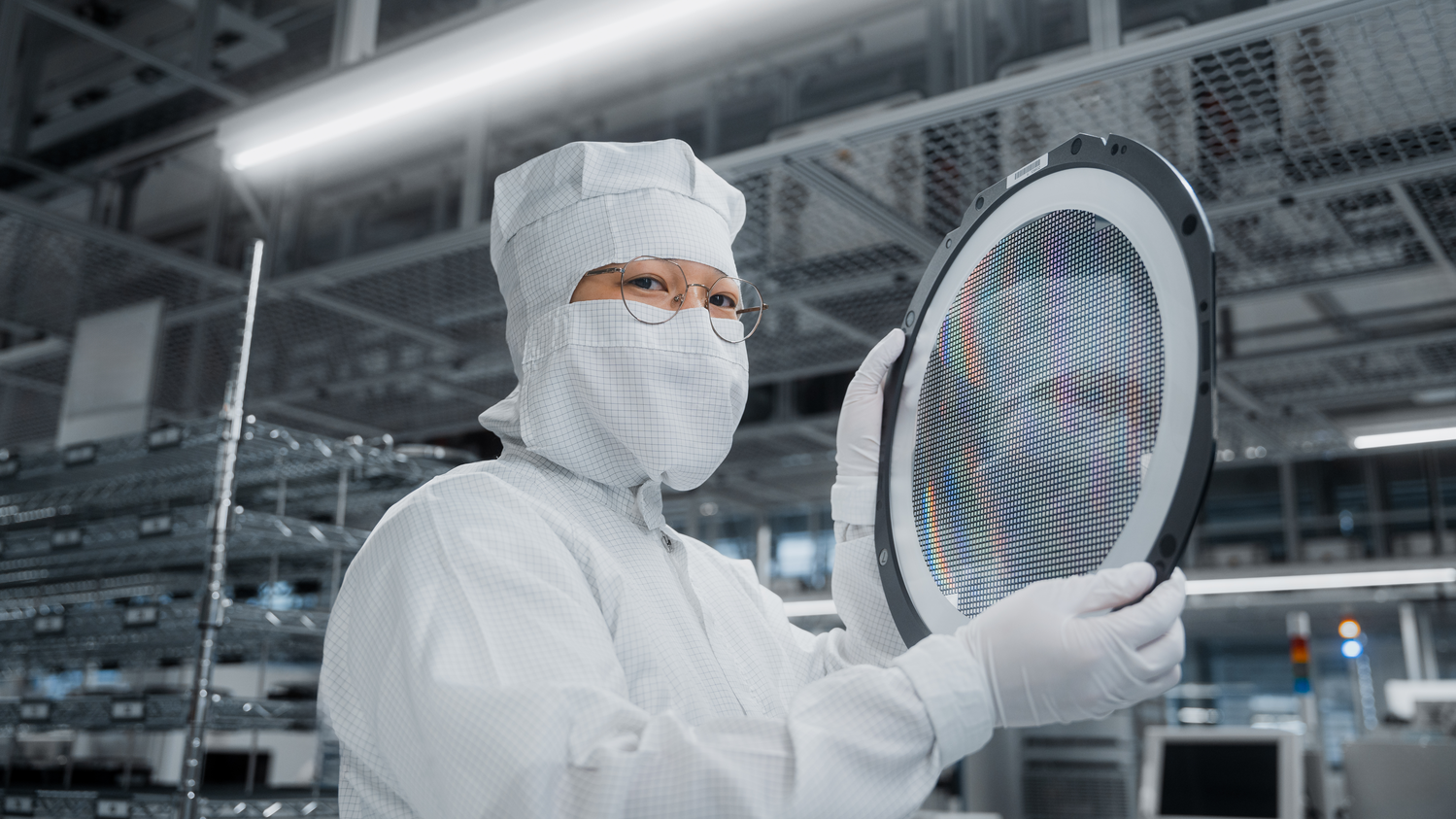
Those who work in microelectronics play an active role in shaping key technologies of the future, as microelectronics is now found in almost all modern technologies. Chips and electronic components are used, for example, in:
Microelectronics is regarded worldwide as a key industry of the future, and demand for chips and electronic systems continues to rise. That is why Saxony will continue to need many international skilled workers in the future.
The industry offers jobs for people with a range of qualifications—from partial certification and vocational training to college degrees. For example, we are looking for:
Saxony offers many opportunities for apprenticeships, university studies, and continuing education in the field of microelectronics. Companies often work closely with universities, vocational schools, and research institutions. This allows practical experience and theoretical knowledge to be directly combined.
Knowledge in the following areas is particularly in demand:
A dual vocational training program combines on-the-job training at a company with classes at a vocational school. Depending on the profession, the program typically lasts between 2 and 3.5 years.
Typical apprenticeship professions include, for example:
For more information on training and career opportunities in microelectronics, as well as interactive content and fun games related to the chip industry in Saxony, visit the BIZ platform of Silicon Saxony.
You can find available apprenticeship positions in the job listings or on the apprenticeship portals in the Job Search section, as well as on the Silicon Saxony Job Board.
Strong knowledge of mathematics, natural sciences, and technology is often essential. For many apprenticeship programs, a good command of German is also required.
For more information, see Dual Vocational Training.
Saxony’s colleges and universities offer renowned degree programs in electrical engineering, information systems engineering, microelectronics, and related fields. These programs attract many international students each year and provide an excellent foundation for launching a career in the microelectronics industry.
Many programs have a strong practical focus and collaborate with companies in the industry. In some cases, dual study programs are also available.
You can search for a suitable program in the STUDY IN SAXONY program database.
For more information, visit Academic Education | SAXONY WORKS.
Even without a full vocational qualification, there are ways to get started in microelectronics. Partial qualifications (TQ) teach the practical and theoretical aspects of a profession step by step.
One example is the partial qualification program for microtechnologists in Dresden. There, participants learn, among other things:
Upon completion, entry-level positions in laboratory and cleanroom areas of semiconductor production are possible. Partial qualifications can also serve as a stepping stone toward a future vocational degree.
For more information, see Microtechnologist – TQ1 - MYTQ
Saxony is one of the most important hubs for the semiconductor industry in Europe. One in three chips produced in Europe comes from Saxony.